
Why Food Education
We don’t just teach about food, we use food as a lens for exploring science, math, literacy, social studies, and more. Food Education connects students to the sources, cultural significance, and science of food while building skills for lifelong health and environmental stewardship.
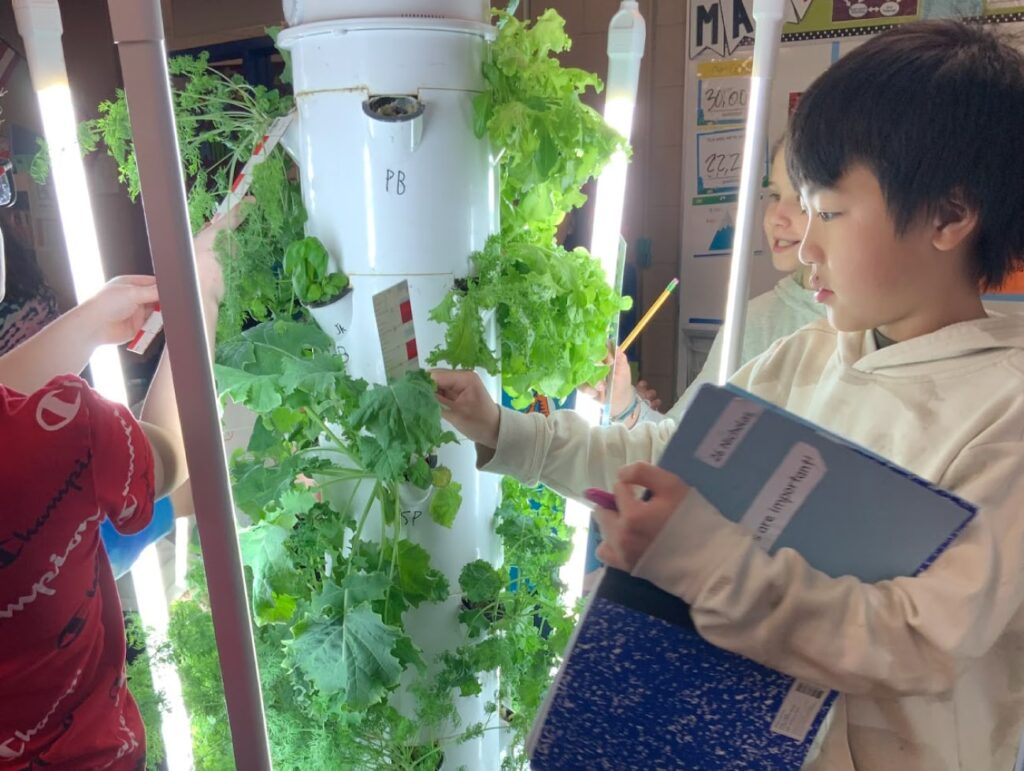
Watch the video below to learn why Food Education is important.
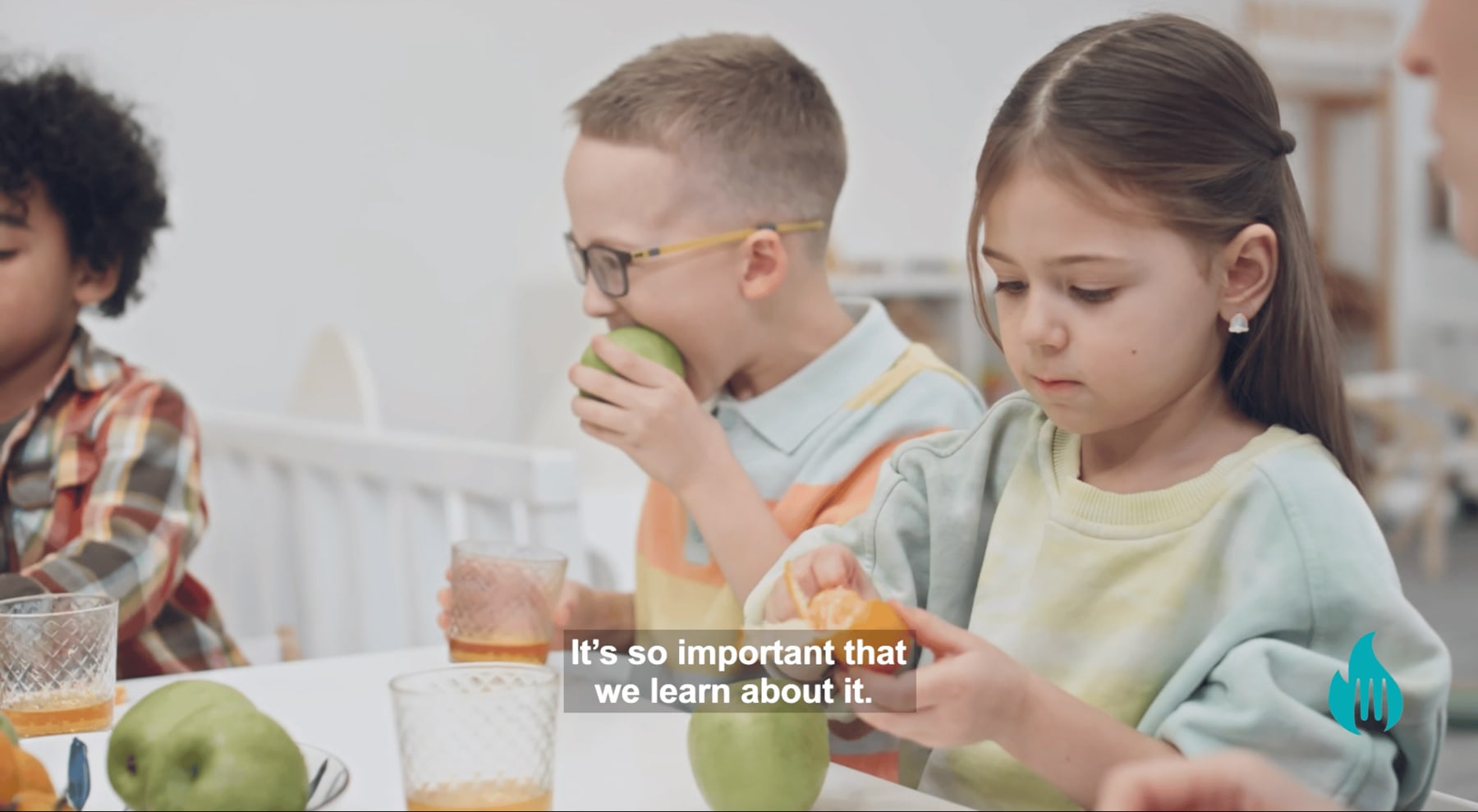
What makes us different?

Standards-Aligned
Our curriculum meets academic standards while building food literacy.

Teacher-Tested
Every lesson is developed with and refined by classroom educators.

Evidence-Based
Our approach is grounded in research on experiential learning and child development.
Watch the video below to learn more about our Food Education Standards
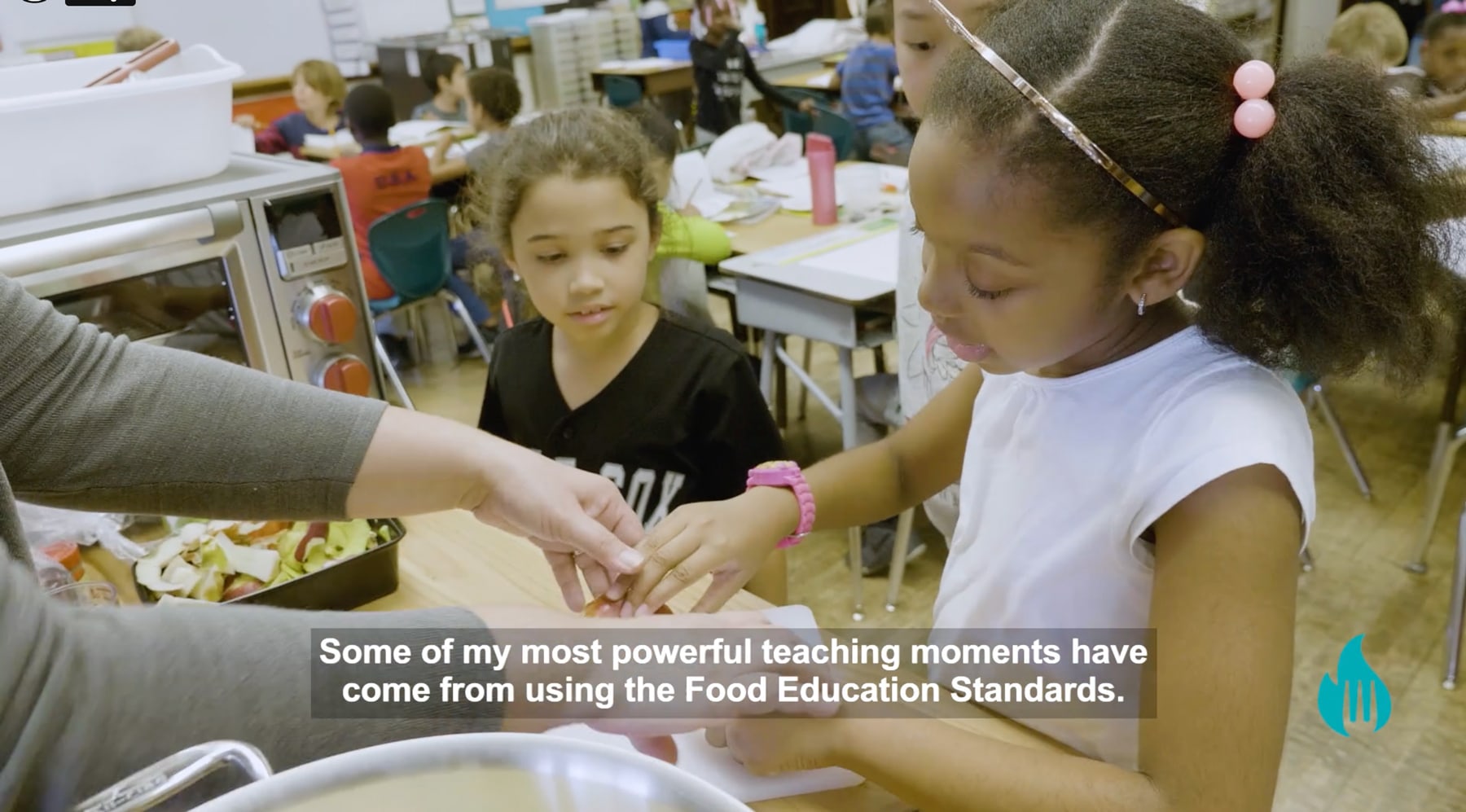
Pilot Light developed the Food Education Standards (FES) as the first comprehensive framework for PreK-12 Food Education. These seven standards guide what students should know and be able to do at each developmental stage, creating a cohesive progression from early childhood through high school.

The Food Education Standards
- Food connects us to each other.
- Foods have sources and origins.
- Food and the environment are interconnected.
- Food behaviors are influenced by external and internal factors.
- Food impacts health.
- We can make informed food choices.
- We can advocate for food choices and changes that impact ourselves, our communities, and our world.